The 5 Warning Signs Your Body Needs Strength Training Now
Most people don’t wake up one morning and suddenly feel weak. The decline is gradual, almost imperceptible—until you’re standing in your kitchen, frustrated because you can’t open a jar of jam, or avoiding stairs because they leave you breathless.
If you’ve been following our previous articles on muscle loss and power decline, you understand the science. But understanding a problem and recognising it in yourself are two different things.
Here are five warning signs that your body is already experiencing the effects of muscle and power loss—and why acting now matters more than you think.
Warning Sign 1: You Struggle With Things That Used to Be Easy
It starts small. Opening a tight jar requires both hands and significant effort. Lifting your suitcase into the overhead locker on a flight becomes awkward. Getting down on the floor to play with your grandchildren is fine—it’s getting back up that’s the problem.
What’s really happening: These everyday movements require a combination of strength and power. When you reach for something on a high shelf or push yourself up from the ground, you’re using the same Type II muscle fibres we discussed in our previous article—the ones that decline by 3% every decade after 40.
The concerning part isn’t that these tasks are harder. It’s that you’ve started modifying your behaviour to avoid them. You ask someone else to open the jar. You check in your suitcase instead of carrying it on. You sit in a chair instead of getting down on the floor.
Each adaptation is your body’s way of telling you it needs more challenge, not less.
Warning Sign 2: Stairs Leave You Breathless
You’re reasonably active—you walk regularly, maybe even go for a jog—but climbing the stairs to your flat or walking up Park Street in Bristol leaves you more breathless than it should.
What’s really happening: This isn’t necessarily a cardiovascular issue. More often, it’s a power problem. Your legs aren’t generating force efficiently, so your heart has to work harder to compensate. Remember, muscle power is about speed and force combined. Climbing stairs requires you to propel your entire body weight upward repeatedly—that’s pure power output.
Research shows that stair climbing ability is one of the strongest predictors of functional independence in older adults. If stairs are becoming noticeably harder, your body is already experiencing the power decline we need to address.
Warning Sign 3: Your Balance Isn’t What It Was
You catch yourself using the handrail more often, even on slight inclines. You’re more cautious on uneven pavement. You avoid walking on cobblestones or rough terrain. Or perhaps you’ve had a minor stumble recently that shook your confidence.
What’s really happening: Balance requires strength in your stabiliser muscles—the smaller muscles around your ankles, knees, and core that constantly make micro-adjustments to keep you upright. These muscles are often neglected in everyday movement, and they weaken faster than your larger muscle groups.
Poor balance isn’t just inconvenient—it’s dangerous. Falls are the leading cause of injury-related death in adults over 65, and the trajectory that leads there begins in your 40s and 50s with gradual balance deterioration.
Warning Sign 4: You Have Persistent Aches and Pains
Your lower back aches after standing for a while. Your knees complain when you’ve been sitting too long. Your shoulders feel tight and restricted. You’ve told yourself it’s just “getting older,” but is it?
What’s really happening: Weak muscles force your joints to take up the slack. When your core and glutes are weak, your lower back compensates. When your leg muscles can’t properly support your knees, the joint bears more stress. When your shoulder stabilisers aren’t working properly, your neck tightens up.
Many of the aches and pains we attribute to ageing are actually symptoms of muscle weakness and imbalance. Strength training doesn’t just mask the pain—it addresses the root cause by restoring the muscular support your joints need.
Warning Sign 5: Your Metabolism Has Changed
You haven’t significantly changed your diet, but you’re carrying more weight, particularly around your middle. You feel more sluggish, especially in the afternoon. Your energy levels aren’t what they were five years ago.
What’s really happening: Muscle tissue is metabolically active—it burns calories even at rest. As we lose 3-5% of muscle mass per decade (as covered in our first article), our basal metabolic rate decreases. You’re literally burning fewer calories just by existing.
The decline in muscle mass also affects insulin sensitivity, making it easier to store fat and harder to maintain stable energy levels throughout the day. This creates a frustrating cycle: less muscle means lower metabolism, which means more fat storage, which makes movement harder, leading to even less muscle.
Why These Signs Matter (And Why They’re Connected)
You might have read through this list and recognised yourself in just one or two points. That’s significant—these warning signs are connected. Weakness in one area accelerates decline in others:
- Poor balance increases fall risk, which makes you less active, which accelerates muscle loss
- Low energy makes exercise less appealing, which speeds up metabolic decline
- Aches and pains limit movement, reducing the natural stimulus your muscles need to maintain strength
The trajectory is clear: small signs of decline compound into larger problems if left unaddressed.
The Good News
Every single warning sign on this list is reversible with appropriate strength training. You don’t need to accept them as inevitable parts of ageing.
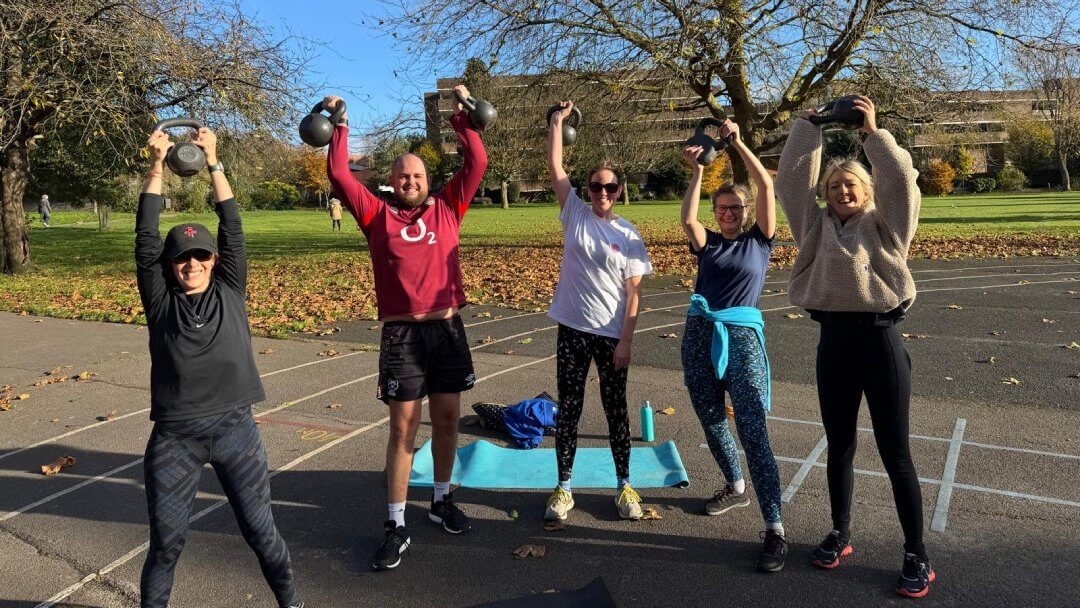
At Hive Fitness in Bristol, we see these transformations regularly. People who struggled to get up from the floor are now doing burpees. Those who avoided stairs are now managing the slopes around Totterdown and Redcatch Park without a second thought. Balance improves, aches diminish, and energy returns.
The key is addressing these warning signs before they become limitations.
What Makes the Difference
Generic exercise helps, but targeted strength training addresses the specific mechanisms behind these warning signs:
Progressive resistance challenges your muscles to adapt and grow stronger
Explosive movements like jump squats and power exercises rebuild the fast-twitch fibres you’ve been losing
Functional patterns improve the exact movements you use in daily life—squatting, lifting, pushing, pulling
Varied terrain training in places like Redcatch Park naturally challenges balance and stability
Consistent challenge in a group environment provides the stimulus your muscles need to reverse the decline
Your Next Step
If you recognised yourself in multiple warning signs, you’re not alone—and you’re certainly not too far gone to make significant improvements. But the trajectory of decline accelerates the longer you wait.
The question isn’t whether you’ll address these warning signs. It’s whether you’ll address them now, while reversing the decline is straightforward, or later, when it’s become a genuine limitation.
Ready to stop the decline and start rebuilding your strength? Join us at Hive Fitness for a trial session and discover how Bristol’s most supportive fitness community helps you move, feel, and function better.
Book your free taster session today using the code HIVETASTER when booking online. Take the first step toward addressing these warning signs before they become your new normal.
Struggling to decide if strength training is right for you? Contact Hive Fitness to discuss how our outdoor and indoor sessions can address your specific concerns.
References
- Cruz-Jentoft AJ, et al. (2019). Sarcopenia: revised European consensus on definition and diagnosis. Age and Ageing, 48(1):16-31. Available at: https://academic.oup.com/ageing/article/48/1/16/5126243
- Grosicki GJ, et al. (2020). Rapid muscle disuse alters metabolic health. Exercise and Sport Sciences Reviews, 48(2):85-94. Available at: https://journals.lww.com/acsm-essr/fulltext/2020/04000
- Straight CR, et al. (2016). Effects of resistance training on lower-extremity muscle power in middle-aged and older adults. Sports Medicine, 46(3):353-364. Available at: https://link.springer.com/article/10.1007/s40279-015-0418-4
- Sherrington C, et al. (2019). Exercise for preventing falls in older people living in the community. Cochrane Database of Systematic Reviews, 1:CD012424. Available at: https://www.cochranelibrary.com/cdsr/doi/10.1002/14651858.CD012424.pub2
- Hunter GR, et al. (2019). Resistance training conserves fat-free mass and resting energy expenditure following weight loss. Obesity, 16(5):1045-1051. Available at: https://onlinelibrary.wiley.com/doi/10.1038/oby.2008.38
- Public Health England. (2018). Muscle and bone strengthening and balance activities for general health benefits in adults and older adults. Available at: https://www.gov.uk/government/publications
- NHS. (2023). Falls prevention and risk assessment. NHS Better Health. Available at: https://www.nhs.uk/live-well/healthy-body/falls-prevention/
Frequently Asked Questions
What are the main warning signs that I need to start strength training?
The five key warning signs are: struggling with tasks that used to be easy (opening jars, getting up from the floor), becoming breathless on stairs despite being active, noticing your balance isn’t what it was, experiencing persistent aches and pains, and metabolic changes including unexplained weight gain and low energy. If you identify with two or more of these signs, your body is already experiencing muscle and power loss that needs addressing.
How do I know if my balance problems are serious or just normal ageing?
Whilst some balance changes occur with age, needing handrails on slight inclines, avoiding uneven surfaces, or having recent stumbles are warning signs worth addressing. Balance decline begins in your 40s and 50s but is not inevitable—it’s largely caused by weakening stabiliser muscles. Falls are the leading cause of injury-related death in UK adults over 65, so addressing balance issues early through strength training is crucial for long-term independence.
Can strength training really reverse muscle loss after 40?
Yes, absolutely. Research shows that resistance training can increase muscle protein synthesis by up to 100% in older adults, effectively reversing age-related decline. Studies demonstrate that adults in their 70s and 80s can still achieve significant strength and muscle mass gains with appropriate training. The key is starting before small signs become major limitations, and maintaining consistency with progressive resistance training.
Why do stairs make me breathless if I walk regularly and consider myself active?
Stair breathlessness is often a power problem rather than cardiovascular fitness. Your leg muscles aren’t generating force efficiently, forcing your heart to work harder to compensate. Climbing stairs requires explosive power to propel your body weight upward repeatedly—this uses fast-twitch muscle fibres that decline by 3% per decade after 40. Regular walking doesn’t address this power component, which is why targeted strength and power training makes such a difference.
How long before I see improvements from starting strength training?
Most people notice improvements within 4-6 weeks of consistent strength training. Neural adaptations—your brain becoming more efficient at recruiting muscle fibres—occur first, improving strength and coordination. Actual muscle growth follows at 8-12 weeks. Balance improvements often appear quickly as stabiliser muscles respond to training. The key is consistency: 2-3 sessions per week with progressive challenge yields the best results for reversing age-related decline.
Is it too late to start strength training if I’m already experiencing multiple warning signs?
It’s never too late. Research consistently shows that older adults can build strength and reverse decline at any age. The important factor is starting with appropriate progression and expert guidance. At Hive Fitness Bristol, we work with people at all fitness levels, many of whom started with multiple warning signs. The trajectory of decline accelerates if left unaddressed, but every day you start is better than waiting longer.
What type of strength training is best for addressing these warning signs?
The most effective approach combines progressive resistance (challenging your muscles to adapt), explosive movements (rebuilding fast-twitch fibres), functional patterns (movements you use daily), varied terrain (naturally challenging balance), and consistent challenge in a supportive environment. Group fitness classes that incorporate these elements, like those at Hive Fitness, provide accountability whilst addressing all the mechanisms behind the warning signs.
Get In Touch
If you have any questions or would like to find out more about these services, you can contact me via the website here Contact NowAreas Covered
I am based in South Bristol and offer group fitness classes in Knowle and Totterdown which is a short journey from: Bedminster, Ashton, Bower Ashton, Redcatch, Bishopsworth, Hartcliffe, Whitchurch, Hengrove, Brislington, St Anne's Windmill Hill and Southville

Services Overview
I offer outdoor group fitness classes in South Bristol, specialising in strength training for adults over 30 who want to combat muscle loss, improve bone density and maintain functional fitness. My approach is science-backed and supportive, creating a welcoming environment for all fitness levels. Classes focus on bodyweight training, resistance work and functional movement patterns that translate to everyday life. Sessions run at Redcatch Park with indoor options at The Harbour Totterdown during winter months. Classes are designed to build sustainable fitness habits within a supportive community where you can get fitter, stronger and move better at your own pace.