The Muscle-Bone-Balance Connection: Why They Decline Together
Most people treat muscle loss, bone loss, and balance problems as three separate conversations. But they are not. They are three symptoms of the same underlying biological shift — and they compound each other in ways that significantly raise your risk of injury as you age.
Understanding the science behind the connection, and why it intensifies for women around menopause, reveals exactly why the right kind of exercise is so powerful: it does not address one problem at a time. It addresses all three simultaneously.
Why Muscle and Bone Are Biologically Interdependent
Your skeleton is not static. Bone tissue is constantly being broken down and rebuilt through a process called remodelling, governed by a fundamental biological principle known as Wolff’s Law: bones adapt to the mechanical loads placed upon them. When muscles contract during movement and exercise, they create tension and compression on bone — signals that trigger bone-forming cells called osteoblasts to lay down new bone.
When muscle mass declines — through the process of sarcopenia covered in our previous article — this mechanical stimulus diminishes. Less muscle means less load on bone, which means less signal for bone renewal. The result is accelerating bone density loss, or osteopenia, which, left unchecked, progresses to osteoporosis.
Researchers now use the term osteosarcopenia to describe the co-occurrence of low muscle mass and low bone density. Studies show that osteosarcopenia carries a fracture risk significantly higher than either condition alone — because not only are bones more fragile, but the muscles that might have helped absorb impact or prevent a fall are also weakened.
The Menopause Effect on Both Systems
For women, the interconnection tightens further around perimenopause and menopause. Oestrogen plays protective roles in both muscle and bone: it supports muscle protein synthesis and directly inhibits osteoclast activity — the cells responsible for breaking down bone tissue.
When oestrogen levels fall, both of these protective effects weaken simultaneously. Women can lose up to 10% of bone density in the five years immediately following menopause, and muscle mass loss accelerates during the same window. This convergence is not coincidental — it is driven by the same hormonal change, happening at the same time.
This is one of the reasons why the perimenopause transition carries such significant long-term implications for physical health. The changes are real, they are measurable, and they respond well to targeted intervention.
Balance: The Third Factor
Balance is often left out of the muscle-bone conversation, but it belongs at the centre of it.
Maintaining your balance depends on three systems working in synchrony: vision, your vestibular system (inner ear), and proprioception — your body’s ability to sense its own position and movement in space. All three become less precise with age. But the muscular dimension is particularly critical.
Fast-twitch muscle fibres — the ones responsible for rapid, reactive movements — decline faster than slow-twitch fibres as we age. These are the fibres your nervous system recruits in a fraction of a second when you slip, trip, or stumble. When fast-twitch capacity is reduced, your ability to catch yourself before a fall is significantly impaired.
Falls are the leading cause of injury-related hospital admissions among older adults in the UK. Most serious fractures — at the hip, wrist, and spine — occur in people who already have compromised bone density. The risk from a fall is therefore not just determined by the fall itself, but by the convergence of impaired balance, weakened muscles, and fragile bones.
What Exercise Does to All Three Systems
Here is the important point: targeted exercise addresses all three systems concurrently.
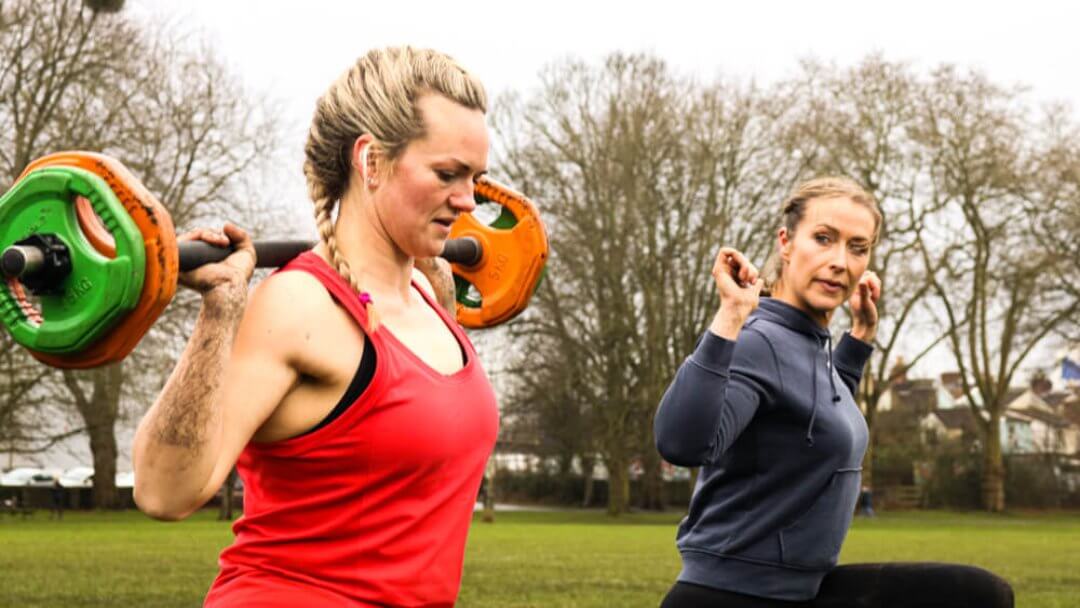
Resistance training — exercises that load muscles against weight or resistance — stimulates bone remodelling through mechanical stress, rebuilds and preserves lean muscle mass, and improves the neuromuscular coordination and fast-twitch fibre recruitment that underpins balance and fall prevention.
The research on this is robust. Progressive resistance training can improve bone density, slow sarcopenia, and significantly reduce falls risk in women who begin training in their 40s, 50s, and beyond. Starting later does not eliminate the benefit — the adaptive capacity of bone and muscle remains throughout adulthood.
This is the rationale behind Hive Fitness Bristol’s programme. Our outdoor sessions at Redcatch Park and indoor sessions at The Harbour Totterdown are built around progressive resistance and functional movement — the kind of training that creates meaningful mechanical load on bones, builds muscle mass across the whole body, and develops the reactive stability that protects against falls.
A Note on Nutrition
Exercise is the primary driver of adaptation, but nutritional support matters. Adequate protein — around 1.2–1.6g per kilogram of body weight daily for active adults — is essential for muscle protein synthesis. Calcium and vitamin D are both required for bone health, and vitamin D insufficiency is widespread in the UK, particularly from October through March. If you have not had your vitamin D levels checked recently, it is worth raising with your GP.
Related Reading
Why Strength Training Becomes Non-Negotiable After 30: The Science Behind Muscle Loss and How Bristol Residents Can Fight Back
When Did You Last Jump: The Science of Muscle Power and Why It Matters More Than Strength
The Fall That Changes Everything: Why Balance Training Matters More After 50
Why You’re Losing Strength Faster Than Your Parents Did
Recovery After 40: Why Your Body Needs More
The Metabolism Myth: Why You Can’t Out-Train a Slowing Metabolism
References
- NHS. (2023). Osteoporosis. NHS UK. Available at: https://www.nhs.uk/conditions/osteoporosis/
- Compston JE, McClung MR, Leslie WD. (2019). Osteoporosis. The Lancet, 393(10169):364–376. Available at: https://pubmed.ncbi.nlm.nih.gov/30696576/
- Cruz-Jentoft AJ, et al. (2019). Sarcopenia: revised European consensus on definition and diagnosis. Age and Ageing, 48(1):16–31. Available at: https://doi.org/10.1093/ageing/afy169
- Brooke-Wavell K, et al. (2022). Strong, steady and straight: UK consensus statement on physical activity and exercise for osteoporosis. British Journal of Sports Medicine. Available at: https://pubmed.ncbi.nlm.nih.gov/35577538/
- NICE. (2012). Osteoporosis: assessing the risk of fragility fracture. Clinical guideline CG146. Available at: https://www.nice.org.uk/guidance/cg146
Frequently Asked Questions
Can you reverse bone loss with exercise?
You can slow bone loss significantly and, in some cases, modestly improve bone density through progressive resistance training and weight-bearing exercise. The key is progressive overload — gradually increasing resistance over time to continue providing sufficient mechanical stimulus for bone remodelling.
How do I know if I have low bone density?
The most reliable way is a DEXA scan — a quick, low-radiation scan that measures bone density at the hip and spine. The NHS recommends speaking to your GP about a DEXA scan if you have risk factors including family history of fractures, low body weight, early menopause, or long-term steroid use.
Is walking enough to protect my bones and muscle?
Walking provides some weight-bearing benefit, but it may not deliver sufficient load to meaningfully stimulate bone remodelling at the hip, or to build the fast-twitch muscle fibres critical for balance and fall prevention. Resistance training consistently shows stronger effects on both bone density and muscle quality than walking alone.
Ready to Build Strength From the Ground Up?
Understanding why muscle, bone, and balance decline together is the first step. Taking action is the second. Hive Fitness Bristol classes are designed specifically for adults over 30 who want to train with purpose — progressive, evidence-based sessions at Redcatch Park and The Harbour Totterdown that address all three systems in every session.
Get in touch to find out which session is the right fit for you.
Get In Touch
If you have any questions or would like to find out more about these services, you can contact me via the website here Contact NowAreas Covered
I am based in South Bristol and offer group fitness classes in Knowle and Totterdown which is a short journey from: Bedminster, Ashton, Bower Ashton, Redcatch, Bishopsworth, Hartcliffe, Whitchurch, Hengrove, Brislington, St Anne's Windmill Hill and Southville

Services Overview
I offer outdoor group fitness classes in South Bristol, specialising in strength training for adults over 30 who want to combat muscle loss, improve bone density and maintain functional fitness. My approach is science-backed and supportive, creating a welcoming environment for all fitness levels. Classes focus on bodyweight training, resistance work and functional movement patterns that translate to everyday life. Sessions run at Redcatch Park with indoor options at The Harbour Totterdown during winter months. Classes are designed to build sustainable fitness habits within a supportive community where you can get fitter, stronger and move better at your own pace.