Why Strength Training Becomes Non-Negotiable After 30
From age 30 onwards, we lose between 3-5% of our muscle mass every decade. This silent process, known as sarcopenia, isn’t just about aesthetics – it’s a fundamental shift that affects every aspect of your health and quality of life.
In this article, we’ll explore the science behind age-related muscle loss and explain why strength training becomes essential as we age.
What’s Covered in This Series
This pillar article is the foundation of our complete guide to strength training for adults over 30. Each article below explores a specific aspect of muscle loss, bone health, and how to address these changes:
When Did You Last Jump: The Science of Muscle Power and Why It Matters More Than Strength
The Fall That Changes Everything: Why Balance Training Matters More After 50
Why You’re Losing Strength Faster Than Your Parents Did
The Muscle-Bone-Balance Connection: Why They Decline Together
Recovery After 40: Why Your Body Needs More
The Metabolism Myth: Why You Can’t Out-Train a Slowing Metabolism
The Hidden Crisis: What Really Happens to Your Muscles After 30
The statistics are sobering: from the age of 30 onwards, we lose between 3-5% of our muscle mass every decade. This process, known as sarcopenia, isn’t just about aesthetics – it’s a fundamental shift that affects every aspect of your health and quality of life.
But why does this happen? The science reveals several interconnected factors:
Hormonal Changes: Growth hormone production begins to decline in our twenties, reducing protein synthesis – the process by which our bodies build new muscle tissue. Testosterone levels in both men and women also decrease, further impacting muscle maintenance.
Cellular Ageing: Our muscle fibres themselves age, with Type II (fast-twitch) fibres being particularly vulnerable. These are the fibres responsible for power and strength, which explains why we notice decreased ability to sprint up stairs or lift heavy objects as we age.
Protein Turnover Imbalance: Younger bodies maintain a positive balance between muscle protein synthesis and breakdown. As we age, this balance shifts, with breakdown outpacing synthesis even when we’re consuming adequate protein.
Neuromuscular Changes: The connection between our nervous system and muscles becomes less efficient, leading to decreased motor unit recruitment – essentially, our brains become less effective at telling our muscles to contract forcefully.
The Bone Density Connection: Why Your Skeleton Needs Strength Training Too
Muscle loss doesn’t happen in isolation. Our bones are living tissues that respond to the demands placed upon them, following Wolff’s Law – the principle that bone adapts to the loads it bears.
When we lose muscle mass, we simultaneously lose bone density. This is particularly concerning because:
- Osteoporosis Risk: Reduced bone density increases fracture risk exponentially. Hip fractures, in particular, can be life-changing events for older adults.
- Mechanical Loading: Strength training provides the mechanical stress that bones need to maintain their density and strength.
- Calcium Retention: Weight-bearing exercise helps the body retain calcium more effectively than supplementation alone.
Research published in the Journal of Bone and Mineral Research demonstrates that resistance training can increase bone density by 1-3% per year in postmenopausal women – a significant improvement considering bone density typically decreases by 1-2% annually after menopause.
The Menopause Factor: Why Women Face Additional Challenges
For women, the transition through perimenopause and menopause creates a perfect storm for accelerated muscle and bone loss. Here’s the science:
Oestrogen Decline: Oestrogen plays a crucial role in maintaining muscle mass and bone density. As levels drop during menopause, women can lose up to 20% of their bone density in the first 5-7 years post-menopause.
Inflammatory Changes: Reduced oestrogen increases inflammatory markers in the body, which can accelerate muscle protein breakdown and impair recovery from exercise.
Metabolic Shifts: Many women experience changes in body composition during menopause, with increased tendency to store fat and decreased muscle mass, creating a cycle that’s difficult to break without intervention.
Sleep and Recovery: Hormonal changes often disrupt sleep patterns, impacting the body’s ability to repair and build muscle tissue during rest.
However, strength training can significantly mitigate these effects. A landmark study in the Medicine & Science in Sports & Exercise journal found that postmenopausal women who engaged in resistance training twice weekly for 12 months increased their bone density by 2.9% in the spine and 1.8% in the hip.
The Domino Effect: How Muscle Loss Impacts Every Aspect of Health
The consequences of sarcopenia extend far beyond the gym:
Metabolic Health: Muscle tissue is metabolically active, burning calories even at rest. Loss of muscle mass decreases your basal metabolic rate, making weight management increasingly difficult.
Functional Independence: Simple daily activities – carrying shopping, climbing stairs, getting up from a chair – become challenging as muscle strength declines.
Fall Risk: Reduced muscle mass and strength, particularly in the lower body, increases fall risk. Given that falls are the leading cause of injury-related death in adults over 65, this is a serious concern.
Mental Health: Research shows strong correlations between muscle mass and mental wellbeing, with sarcopenia linked to increased rates of depression and anxiety.
The Solution: Why Strength Training is Your Best Defence
Here’s the encouraging news: sarcopenia is largely preventable and, in many cases, reversible. Strength training provides the specific stimulus needed to:
Stimulate Muscle Protein Synthesis: Regular resistance training can increase muscle protein synthesis by up to 100% in older adults, effectively reversing the age-related decline.
Improve Bone Density: Progressive resistance training provides the mechanical stress bones need to maintain and increase density.
Enhance Functional Capacity: Strength training improves the specific movement patterns we use daily, from squatting to pick something up to pushing and pulling actions.
Boost Metabolic Health: Increased muscle mass elevates your resting metabolic rate, helping with weight management and improving insulin sensitivity.
Why Hive Fitness Bristol’s Approach Works
At Hive Fitness Bristol, we understand that strength training comes in many forms, and the most important factor is consistency and proper progression within your chosen environment.
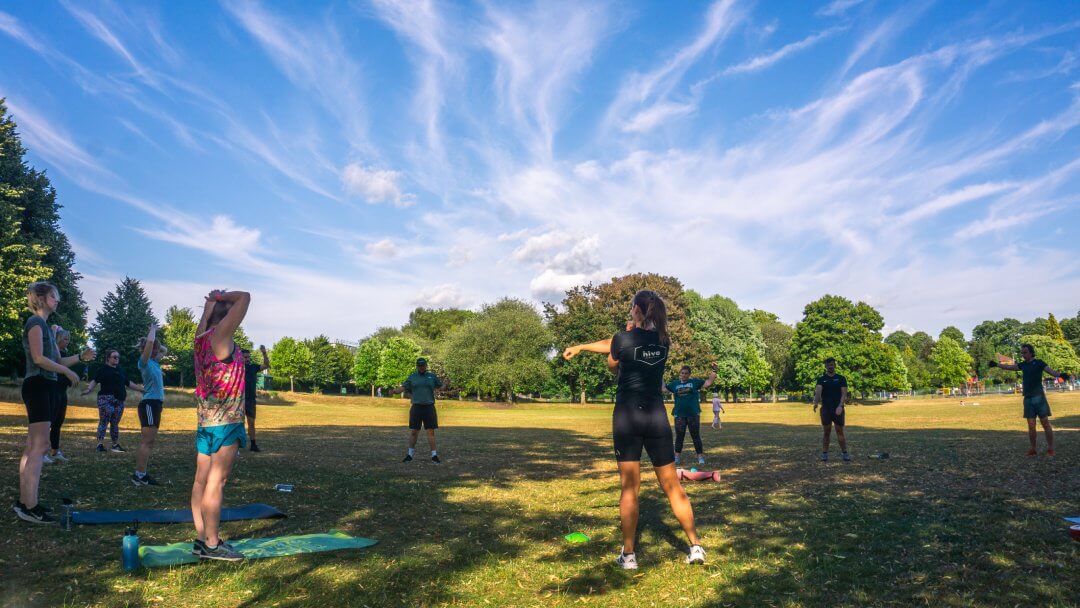
Outdoor Strength Training: Training in Redcatch Park provides the mental health benefits of green exercise whilst building functional strength. We focus on bodyweight progressions, resistance band work, and functional movement patterns that translate directly to real-world activities.
Indoor Options: During Bristol’s winter months, our indoor sessions at The Harbour Totterdown provide a controlled environment for continued strength development and ensure year-round consistency.
Community Support: Our group training environment provides the accountability and motivation that research shows significantly improves exercise adherence – particularly important for building sustainable strength training habits.
Functional Focus: Our approach emphasises movement patterns and strength that directly benefit daily life – squatting, lifting, pushing, and pulling in ways that make everyday activities easier and safer.
The Time to Act is Now
The research is clear: the earlier you start strength training, the better your outcomes. But it’s never too late to begin. Studies show that adults in their 70s and 80s can still achieve significant strength and muscle mass gains with appropriate training.
Every month you delay is another month of 3-5% muscle loss per decade. Every year that passes without strength training is another year of declining bone density and functional capacity.
Your Next Steps
If you’re over 30 and haven’t yet prioritised strength training, consider this your wake-up call. The science doesn’t lie – your future self will thank you for taking action today.
Ready to start your strength training journey with Bristol’s most supportive fitness community?
Book your first session today and experience how Hive Fitness makes strength training accessible, effective, and enjoyable for every fitness level.
Whether you join us in the fresh air of Redcatch Park or in our welcoming indoor space, you’ll receive expert guidance, community support, and a programme designed specifically to help you build and maintain the strength you need for life.
If you have any questions or would like to find out more about these services, you can contact me via the website here:
References
- Cruz-Jentoft AJ, et al. (2019). Sarcopenia: revised European consensus on definition and diagnosis. Age and Ageing, 48(1):16-31. Available at: https://academic.oup.com/ageing/article/48/1/16/5126243
- Kerr D, et al. (1996). Exercise effects on bone mass in postmenopausal women are site-specific and load-dependent. Journal of Bone and Mineral Research, 11(2):218-225. Available at: https://asbmr.onlinelibrary.wiley.com/doi/10.1002/jbmr.5650110211
- Sipilä S, et al. (2020). Muscle and bone mass in middle-aged women: role of menopausal status and physical activity. Journal of Cachexia, Sarcopenia and Muscle, 11(3):698-709. Available at: https://onlinelibrary.wiley.com/doi/full/10.1002/jcsm.12547
- Nelson ME, et al. (1994). Effects of high-intensity strength training on multiple risk factors for osteoporotic fractures. Medicine & Science in Sports & Exercise, 272(24):1909-1914. Available at: https://pubmed.ncbi.nlm.nih.gov/7869495/
- NHS. (2023). Strength and flexibility exercises. NHS Better Health. Available at: https://www.nhs.uk/live-well/exercise/strength-and-flexibility-exercises/
- Wolff J. (1892). Das Gesetz der Transformation der Knochen (The Law of Bone Remodelling). Berlin: Hirschwald.
Frequently Asked Questions
Why do we lose muscle mass after 30?
Muscle loss after 30 occurs due to hormonal changes (declining growth hormone and testosterone), cellular ageing of muscle fibres, imbalanced protein turnover, and decreased neuromuscular efficiency. These factors combine to reduce muscle protein synthesis whilst increasing breakdown, resulting in 3-5% muscle loss per decade.
Can strength training really reverse muscle loss?
Yes, absolutely. Research shows that regular resistance training can increase muscle protein synthesis by up to 100% in older adults, effectively reversing age-related decline. Studies demonstrate that adults in their 70s and 80s can still achieve significant strength and muscle mass gains with appropriate training.
How does strength training improve bone density?
Strength training provides mechanical stress that bones need to maintain and increase density, following Wolff’s Law. Research shows resistance training can increase bone density by 1-3% per year in postmenopausal women – particularly significant since bone density typically decreases by 1-2% annually after menopause.
Why is menopause particularly challenging for muscle and bone health?
During menopause, declining oestrogen levels accelerate both muscle and bone loss. Women can lose up to 20% of bone density in the first 5-7 years post-menopause. Reduced oestrogen also increases inflammatory markers, impairs recovery, and disrupts sleep patterns – all factors that negatively impact muscle maintenance.
Do I need a gym to do effective strength training?
No, effective strength training doesn’t require a traditional gym. Bodyweight exercises, resistance bands, and functional movement patterns can build significant strength. The most important factors are consistency, proper progression, and training with correct form – all achievable in outdoor or group training environments like those offered at Hive Fitness Bristol.
How often should I do strength training after 30?
Research suggests at least two resistance training sessions per week provide significant benefits for muscle mass, bone density, and functional strength. Consistency matters more than intensity when starting out. At Hive Fitness Bristol, our group sessions are designed to provide optimal frequency and progression for sustainable results.
Get In Touch
If you have any questions or would like to find out more about these services, you can contact me via the website here Contact NowAreas Covered
I am based in South Bristol and offer group fitness classes in Knowle and Totterdown which is a short journey from: Bedminster, Ashton, Bower Ashton, Redcatch, Bishopsworth, Hartcliffe, Whitchurch, Hengrove, Brislington, St Anne's Windmill Hill and Southville

Services Overview
I offer outdoor group fitness classes in South Bristol, specialising in strength training for adults over 30 who want to combat muscle loss, improve bone density and maintain functional fitness. My approach is science-backed and supportive, creating a welcoming environment for all fitness levels. Classes focus on bodyweight training, resistance work and functional movement patterns that translate to everyday life. Sessions run at Redcatch Park with indoor options at The Harbour Totterdown during winter months. Classes are designed to build sustainable fitness habits within a supportive community where you can get fitter, stronger and move better at your own pace.