Why You’re Losing Strength Faster Than Your Parents Did
Your parents could skip exercise for months and bounce back quickly. You miss a fortnight and feel like you’re starting from scratch. They maintained decent strength well into their 50s with minimal effort. You’re 35 and already noticing decline despite trying harder than they ever did.
This isn’t your imagination. And it’s definitely not your fault.
The uncomfortable truth is that today’s adults are experiencing accelerated muscle loss compared to previous generations. Whilst sarcopenia—the age-related decline in muscle mass—is universal, the rate at which it’s happening has dramatically increased for those of us born after 1970.
The Sedentary Shift: How Movement Disappeared from Daily Life
Your parents’ generation didn’t go to the gym. They didn’t need to. Daily life provided consistent, low-level physical activity that maintained baseline strength and muscle mass without deliberate exercise.
The Pre-Digital Workplace
Consider what office work looked like in the 1970s and 1980s. Filing meant walking to cabinets multiple times per day. Communication required walking to colleagues’ desks. Meetings involved climbing stairs. Document distribution required physical delivery.
A typical office worker in 1980 took 4,000-5,000 steps during their working day simply performing job duties. By 2020, that figure had dropped to 1,500-2,000 steps. Research published in the International Journal of Behavioral Nutrition and Physical Activity found that modern office workers spend an average of 9.6 hours per day sitting—compared to 5.8 hours for their 1980s counterparts.
The Domestic Activity Decline
Home life has undergone an equally dramatic transformation. Manual washing machines required loading, hand-wringing, and line-hanging. Garden maintenance was manual labour. Shopping meant multiple trips carrying bags. Housework involved significant physical effort. Entertainment required movement—changing TV channels, playing outside.
A 2019 study in The Lancet found that UK adults now perform 63% less daily physical activity outside of deliberate exercise compared to 1965 levels. This isn’t about exercise—it’s about the complete removal of natural movement from daily existence.
The Transportation Transformation
Your parents’ generation walked more by default. Fewer households had multiple cars. Public transport use was higher, which involves walking to stops and stations. Children walked or cycled to school rather than being driven.
Data from the UK’s National Travel Survey shows that the average adult walked 255 miles per year in 1975. By 2019, this had fallen to 181 miles—a 29% reduction.
The Ultra-Processed Diet: Metabolic Disruption at Scale
The food your parents ate bears little resemblance to what fills supermarket shelves today. This isn’t nostalgia—it’s biochemistry.
The Rise of Ultra-Processed Foods
In 1980, ultra-processed foods accounted for approximately 20% of the UK diet. By 2020, this had surged to 56.8%—making the UK one of the highest consumers of ultra-processed foods in Europe, according to research published in BMJ Open.
Ultra-processed foods are engineered to override satiety signals whilst promoting fat storage and inhibiting muscle protein synthesis. They create a perfect storm for accelerated muscle loss:
- Insufficient protein: Displaces whole food protein sources essential for muscle maintenance
- Inflammatory compounds: Chronic low-grade inflammation accelerates muscle breakdown
- Insulin disruption: Creates metabolic dysfunction that impairs muscle growth and recovery
- Nutrient deficiency: Lacks vitamins and minerals required for muscle protein synthesis
Protein Quality and Quantity
Your parents’ generation consumed more whole food protein by default. Meals were built around meat, fish, eggs, and dairy. Today’s diet centres on carbohydrate-heavy convenience foods with protein as an afterthought.
Research in the Journal of Nutrition shows that whilst overall calorie consumption has increased, protein as a percentage of total calories has decreased from 17% in 1970 to 14% in 2020. For muscle maintenance after 30, this reduction is significant—particularly because protein requirements actually increase with age due to anabolic resistance.
The Stress Epidemic: Cortisol’s Catabolic Effect
Chronic psychological stress has become the defining feature of modern life—and it’s directly accelerating muscle loss through hormonal mechanisms.
Understanding Cortisol’s Impact on Muscle
Cortisol, your primary stress hormone, is profoundly catabolic. When elevated chronically, it directly breaks down muscle tissue to convert amino acids into glucose for immediate energy, inhibits protein synthesis, promotes abdominal fat storage, disrupts sleep quality, and reduces testosterone in both men and women.
The Modern Stress Landscape
The Health and Safety Executive’s 2023 statistics show that work-related stress, depression, and anxiety account for 17 million lost working days annually in the UK—a figure that has increased 52% since 2001.
But it’s not just work stress. The modern environment creates multiple chronic stressors that your parents’ generation didn’t experience: digital connectivity means you’re never truly “off” from work, financial pressure from the housing affordability crisis, social media comparison creating feelings of inadequacy, information overload from 24-hour news cycles, and reduced community support with weaker social ties.
Research published in Psychoneuroendocrinology found that chronic stress produces sustained cortisol elevation that significantly accelerates age-related muscle loss. In practical terms, high stress can age your muscles by an additional 5-10 years beyond your chronological age.
The Compound Effect: Why It All Matters
No single factor explains why you’re losing strength faster than your parents did. It’s the combination—the compound effect of multiple disadvantages operating simultaneously:
You sit more + eat worse + stress more = Accelerated muscle loss
Your parents faced perhaps one or two of these factors. You’re facing all of them simultaneously. This is why the warning signs of declining strength appear earlier and progress faster than previous generations experienced.
What This Means for Your Future
If current trends continue, today’s 40-year-olds will have the muscle mass and functional capacity of their parents at 55. Today’s 50-year-olds will match their parents at 65.
But here’s the critical point: none of this is inevitable.
Understanding these generational factors isn’t about resignation—it’s about realistic assessment. You can’t change your environment entirely, but you can implement strategic interventions that counteract these accelerating factors.
The Solution: Strategic Intervention
The reality is harsh: you cannot afford the passive approach your parents took. They could maintain reasonable strength into their 50s and 60s without deliberate training. You cannot.
This doesn’t mean spending hours in the gym. It means recognising that strength training after 30 isn’t optional—it’s essential compensation for the cumulative disadvantages of modern life.
What Works in the Real World
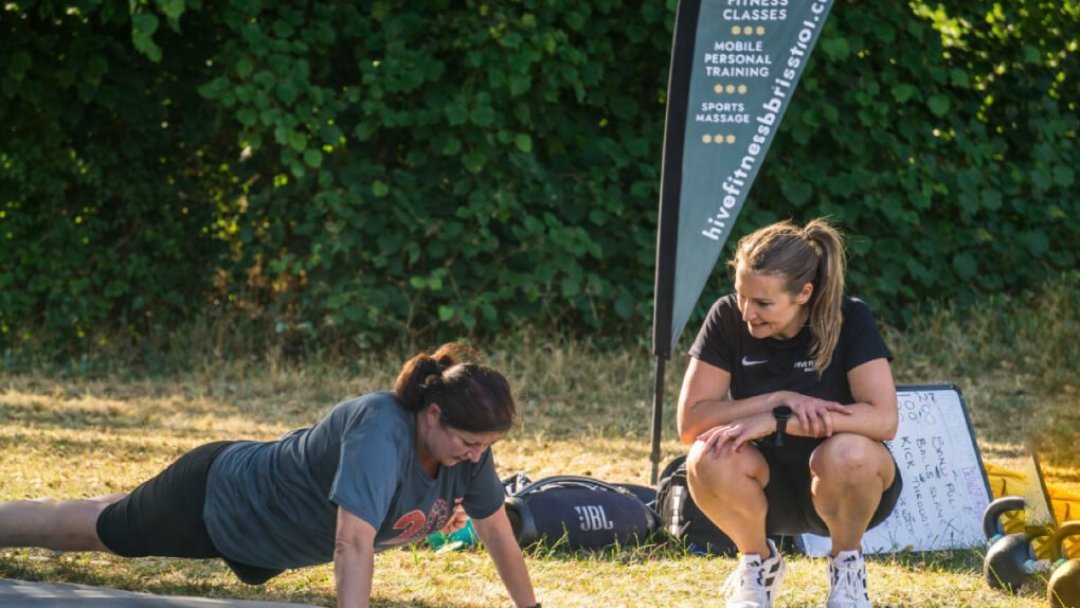
At Hive Fitness Bristol, we work with people who face all of these modern challenges. You’re not going to eliminate stress, quit your desk job, or completely overhaul your diet overnight. But you can implement focused, efficient training that counteracts accelerated muscle loss.
Our outdoor training at Redcatch Park provides additional benefits that indoor exercise cannot replicate: natural light exposure supports vitamin D production, green space reduces cortisol more effectively than indoor exercise, variable terrain builds functional strength and balance simultaneously, and community training provides social connection that reduces chronic stress.
It’s Not About Perfection—It’s About Prevention
You can’t reverse all the environmental and lifestyle changes of the past 50 years. But you can choose to intervene strategically.
Your first 12 weeks of structured strength training can reverse years of accelerated decline. Not because you’re fixing everything—but because you’re providing the stimulus your body desperately needs to maintain what genetics alone can no longer protect. Proper recovery after 40 is equally critical, as your body now requires more intentional rest and repair than previous generations needed.
Your parents could coast. You cannot. The sooner you accept that reality and take action, the better your 50s, 60s, and 70s will look.
Ready to Stop the Decline?
Understanding why you’re losing strength faster than previous generations is the first step. Taking action is what changes your trajectory.
At Hive Fitness Bristol, our outdoor training sessions are specifically designed for adults who are experiencing accelerated decline and need efficient, effective intervention. We train at Redcatch Park in Bedminster and The Harbour in Totterdown, providing the compound stimulus of strength training, natural light, green space, and community support.
You can’t change the environment you were born into, but you can choose how you respond to it.
View our class schedule or get in touch to discuss how we can help you counteract the factors accelerating your decline.
Related Reading
Why Strength Training Becomes Non-Negotiable After 30: The Science Behind Muscle Loss and How Bristol Residents Can Fight Back
When Did You Last Jump: The Science of Muscle Power and Why It Matters More Than Strength
The Fall That Changes Everything: Why Balance Training Matters More After 50
The Muscle-Bone Balance Connection: Why They Decline Together
Recovery After 40: Why Your Body Needs More
The Metabolism Myth: Why You Can’t Out-Train a Slowing Metabolism
References
- Biswas A, et al. (2015). Sedentary Time and Its Association With Risk for Disease Incidence, Mortality, and Hospitalization in Adults. Annals of Internal Medicine, 162(2):123-132. Available at: https://www.acpjournals.org/doi/10.7326/M14-1651
- Ng SW, Popkin BM. (2012). Time use and physical activity: a shift away from movement across the globe. Obesity Reviews, 13(8):659-680. Available at: https://www.ncbi.nlm.nih.gov/pmc/articles/PMC3401184/
- Rauber F, et al. (2020). Ultra-processed food consumption and indicators of obesity in the United Kingdom population (2008-2016). PLOS ONE, 15(5):e0232676. Available at: https://journals.plos.org/plosone/article?id=10.1371/journal.pone.0232676
- Paddon-Jones D, Rasmussen BB. (2009). Dietary protein recommendations and the prevention of sarcopenia. Current Opinion in Clinical Nutrition & Metabolic Care, 12(1):86-90. Available at: https://www.ncbi.nlm.nih.gov/pmc/articles/PMC2760315/
- Health and Safety Executive. (2023). Work-related stress, anxiety or depression statistics in Great Britain. Available at: https://www.hse.gov.uk/statistics/causdis/stress.pdf
- Department for Transport. (2020). National Travel Survey: England 2019. Available at: https://www.gov.uk/government/statistics/national-travel-survey-2019
- Moreira OC, et al. (2017). Chronic stress, cortisol dysfunction, and pain: A psychoneuroendocrine rationale for stress management in pain rehabilitation. Physical Therapy, 97(11):1116-1126. Available at: https://academic.oup.com/ptj/article/97/11/1116/4638030
Frequently Asked Questions
Why am I losing strength faster than my parents did at my age?
Modern adults face multiple compounding factors that accelerate muscle loss: sedentary work and lifestyle (63% less daily physical activity than 1965), ultra-processed diets (now 57% of UK intake versus 20% in 1980), and chronic stress with elevated cortisol. Your parents faced perhaps one of these factors—you’re facing all simultaneously, creating accelerated decline.
Is it too late to reverse accelerated muscle loss?
No. Whilst you cannot eliminate all environmental factors, strategic strength training can reverse years of decline within 12 weeks. Your body responds to stimulus regardless of how much muscle you’ve lost. The key is consistent, progressive resistance training that provides sufficient stimulus to counteract modern disadvantages.
Do I need to spend hours in the gym to counteract these factors?
No. Efficient, focused strength training 2-3 times per week for 45-60 minutes is sufficient to counteract accelerated muscle loss. Quality and consistency matter more than volume. Outdoor training provides additional benefits (sunlight, stress reduction, functional movement) that indoor exercise cannot replicate, making sessions more efficient.
Can I maintain muscle with just walking and yoga like my parents did?
Unfortunately, no. Walking and yoga maintain cardiovascular health and flexibility but provide insufficient stimulus for muscle protein synthesis against modern challenges. Your parents maintained strength with minimal exercise because daily life provided baseline activity and they faced fewer muscle-wasting factors. You require deliberate progressive resistance training to compensate.
What’s the single most important change to slow muscle loss?
Start progressive resistance training immediately. Whilst improving diet, sleep, and stress management all help, nothing compensates for lack of mechanical stimulus on your muscles. Two to three weekly strength sessions create the foundation; other lifestyle improvements enhance results but cannot replace the training stimulus your muscles require to maintain mass and function.
Get In Touch
If you have any questions or would like to find out more about these services, you can contact me via the website here Contact NowAreas Covered
I am based in South Bristol and offer group fitness classes in Knowle and Totterdown which is a short journey from: Bedminster, Ashton, Bower Ashton, Redcatch, Bishopsworth, Hartcliffe, Whitchurch, Hengrove, Brislington, St Anne's Windmill Hill and Southville

Services Overview
I offer outdoor group fitness classes in South Bristol, specialising in strength training for adults over 30 who want to combat muscle loss, improve bone density and maintain functional fitness. My approach is science-backed and supportive, creating a welcoming environment for all fitness levels. Classes focus on bodyweight training, resistance work and functional movement patterns that translate to everyday life. Sessions run at Redcatch Park with indoor options at The Harbour Totterdown during winter months. Classes are designed to build sustainable fitness habits within a supportive community where you can get fitter, stronger and move better at your own pace.